
India’s 1st M.Ch. Cosmetic Gynecologist |

Vaginismus vs. Painful Intercourse: How to Tell the Difference?

In our earlier post on painful sex, we talked about the range of reasons intercourse can hurt. This one is a bit more specific. A lot of women land in my consultation room unsure whether what they’re experiencing is vaginismus, or something else entirely that just happens to also be painful. The two get used interchangeably online, but they’re not quite the same thing, and knowing the difference can help you understand your own experience a little better before you even walk in.
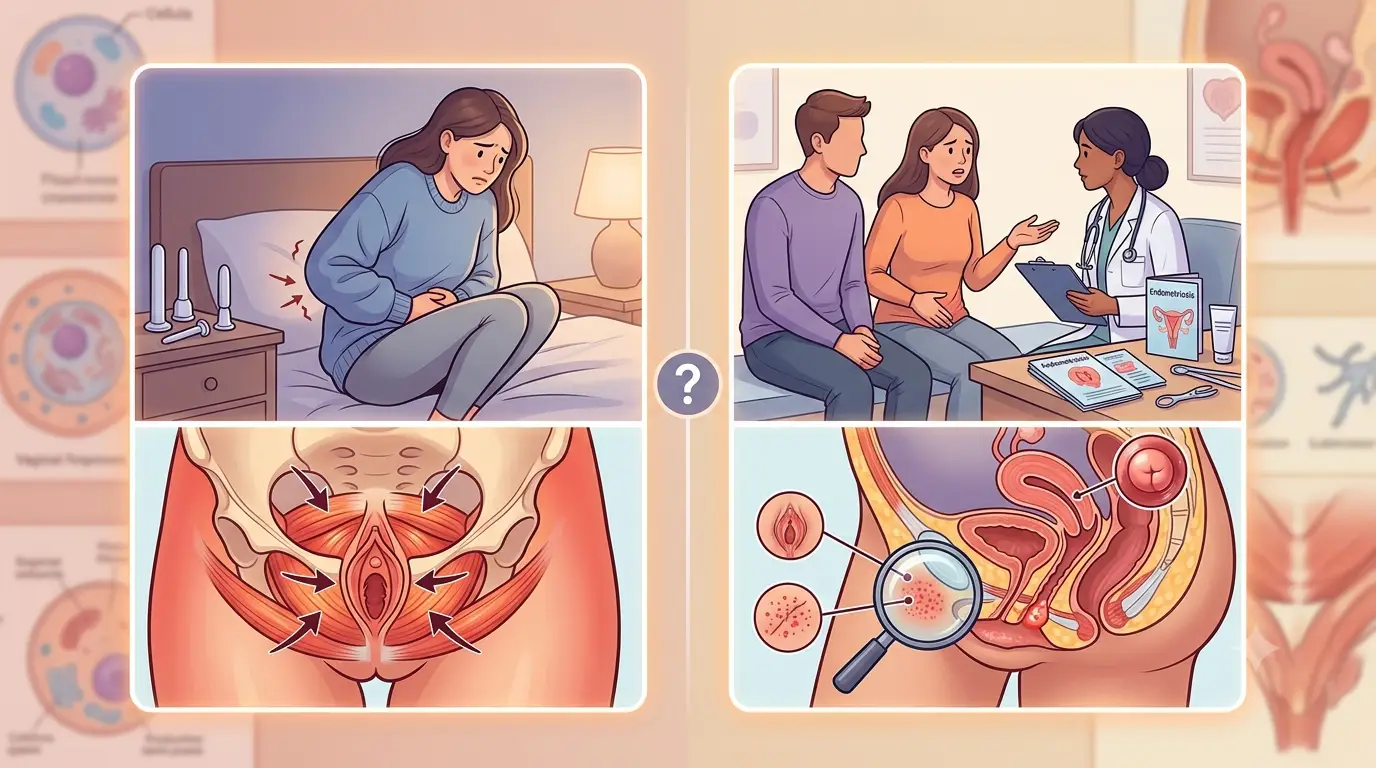
This isn’t meant to replace an actual diagnosis. Think of it as a starting point, a way to put words to what you’ve been feeling.
Table of Contents
A few questions to sit with
Does penetration feel physically impossible, like your body is actively resisting it, rather than just painful? If it feels like there’s an involuntary tightening that makes entry difficult or impossible, almost like your body is closing itself off before anything even happens, that’s leaning toward vaginismus. It’s a muscle reflex, not a conscious choice, and it can happen even when you genuinely want it to work.
Or does penetration happen, but it hurts once it does? If entry itself isn’t the barrier, but there’s burning, sharp pain, or deep discomfort during or after, that points more toward a different cause: dryness, an infection, scar tissue, or an underlying condition rather than the muscle-tightening pattern of vaginismus.
Has this been the case since your very first attempt at penetration (with a partner, a tampon, or a medical exam), or is this a newer development? Vaginismus is often, though not always, present from the very first attempt at any kind of penetration. If this is a new pattern that started after childbirth, a specific incident, or around menopause, that timeline points toward a different, often more physical, cause.
Does anxiety or bracing happen before you even try, almost anticipating the pain? This is common in vaginismus, where the anticipation itself triggers the muscle response. If the anxiety feels more like a reaction to pain you’ve already experienced, rather than something that happens before anything’s been attempted, that’s a slightly different pattern, though the two can absolutely overlap and feed into each other over time.
Is the pain localized to one specific area, or does it feel more general? A specific, consistent point of pain (like at the vaginal opening only) can point toward something structural, like scar tissue or a skin condition. More generalized pain, or pain that varies, often fits a broader picture involving dryness, hormonal changes, or pelvic floor tension.
Why is it fine if you’re still not sure?
If you read through those and think “maybe a bit of both,” that’s genuinely common, and it’s exactly why a proper evaluation matters more than trying to self-diagnose completely. Vaginismus and other causes of painful intercourse aren’t mutually exclusive. Pain from one cause can absolutely lead to the muscle-guarding pattern of vaginismus developing on top of it, which is part of why this can feel confusing to untangle on your own.
What matters is that both are treatable, and neither one means anything is permanently wrong with you.
What is this self-check actually for?
The goal here isn’t for you to walk into a consultation with a self-diagnosis. It’s so that when you’re asked “what does it actually feel like,” you have language for it already, which makes the conversation faster and more useful for both of us. An actual diagnosis needs an examination and a proper conversation about your history, not a checklist.
If any of this sounded familiar while you were reading, that’s worth acting on rather than filing away for later.
Ready to actually get some answers? Book a consultation and let’s work out what’s actually going on, together.
FAQ
Can I have vaginismus and another cause of painful sex at the same time? Yes, this is actually quite common. One often triggers or worsens the other, which is part of why professional evaluation matters.
Does vaginismus mean I don’t want sex? No. It’s an involuntary physical response, not a reflection of desire or attraction. Many women with vaginismus want intimacy and are frustrated by their body’s response, not indifferent to it.
Can vaginismus develop later in life, even if I didn’t have it before? Yes. While it often starts with a first attempt at penetration, it can also develop later, sometimes after a painful experience, childbirth, or a period of avoidance.
Is there a test to confirm vaginismus? There isn’t a lab test. It’s diagnosed through a conversation about your history and a gentle physical examination, done at your pace and comfort level.
